…and we love our job! The people we serve are not projects to manage. They are teachers. We love to learn, and we count it a privilege to adapt in ways that help all of us human better.
Who we are
Three generations of work in IDD.
Grace Mountain Agency was founded by Christina and Ian Thomson in October 2020 — but the work began long before. Grace Mountain is the third generation of a family commitment to people with intellectual and developmental disabilities, started by Christina’s grandmother.
Our mission
We are cultivating a movement where people with disabilities teach us how to human better.
Our philosophy
Every behavior is a real need trying to be met.
A lot of agencies work to manage behavior. We work to understand it. The difference matters: when we treat a person’s behavior as an authentic, real signal of an unmet need, the placement starts working in a way it doesn’t when behavior is something to suppress.
In practice, this means our care coordinators get curious. They watch and listen for how each person communicates, with words or without them. They ask what a client is trying to achieve, what they’re trying to avoid, and what healthier ways exist to meet the same need. It means our host home providers receive elevated training for the level of support our clients require — particularly clients coming from regional centers or institutions, where behavioral patterns formed under conditions that no longer apply.
Placements that stick aren’t accidents. They’re the result of listening first.
Our story
Founded October 2020.
Grace Mountain is the third generation of a family commitment to people with intellectual and developmental disabilities. The work began with Christina’s grandmother and has been carried forward in the family ever since. Christina and Ian Thomson bring 30+ years of combined experience in IDD services to that lineage — experience earned across multiple states, now focused on Colorado’s Denver metro and Boulder County.
When they founded Grace Mountain Agency in October 2020, they saw a pattern: case managers with hard-to-place clients didn’t need another agency that took the easy placements. They needed an agency that took every level of need — and treated each one with the same care.
Today, Grace Mountain operates as a Colorado Program Approved Service Agency (PASA) under the HCBS-DD waiver, serving adults 17+ across Arapahoe, Douglas, Denver, Jefferson, Adams, and Boulder counties — with I-70 corridor expansion coming soon — through Host Homes, Personal Care Alternatives, and Family Caregivers.
Christina serves as CEO and personally takes every new-client intake call before handoff to a Care Coordinator. Ian leads operations, growth, and new ventures.
The team
People accountable for the work, by name.

Owner / CEO. Client acquisition, intake, and the move-in handoff. Bilingual (English / Spanish).
Christina Thomson

Owner. Operations, growth, and new ventures.
Ian Thomson

Care Coordinator and Provider Training Lead.
Mallory Beasinger
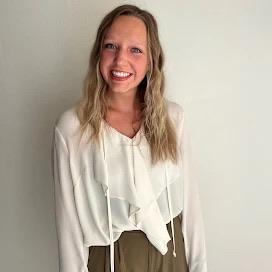
Care Coordinator. Client Money Management and Social Security support.
Tori Freilinger
SM
Agency Nurse. Clinical oversight and medication compliance across every home.
Sandra Mauck

Grants Lead. Grant research and applications, plus executive admin support.
Ashley Binkley
HK
Medicaid Billing Specialist. Plus Social Security support.
Hannah Kruse
Compliance & credentials
The numbers behind the agency.
2020
Founded · Colorado PASA
1386254019
Medicaid Provider NPI
6
Counties served · Denver Metro + Boulder
Want to talk?
Christina personally takes every new-client call. We respond within one business day.